Category Archives: geology

124. Exploring Africa with Bono

My dream had come true – a request to write a journal editorial about Africa, and it had arrived on the same day that Bono edited The Independent, too.

bono_mali.jpg‘May I say without guile, I am as sick of messianic rock stars as the next man, woman or child.’ Those are Bono’s words from 16 May, but substitute ‘geologists’ for ‘rock stars’ (they’re almost synonyms, after all) and perhaps you’ll soon agree.

The African geology conference in London earlier this month placed the wonders of the continent firmly at centre stage. I’ve been fortunate to witness something of African geology from Cape Bon to the Cape of Good Hope, and my geological travels have revealed many highlights in between, from the souk in Tripoli and the coffin shop in Tema, Ghana (Planned City at the Centre of the World) to the snow-capped High Atlas peaks rising beyond Marrakech.

live8_album2.jpgAnd one of my most formative experiences as a geologist and a politically-conscious human being was a summer spent on a diamond prospect in the darkest Karoo.

So what have the musings of a messianic rock star like Bono to do with life as an explorationist?
Continue reading

122. Cephallonia dreaming

cephallonia-sami-captain-corellis-mandolin.jpgThe Ionian Sea is shimmering brilliantly beside me as I look across the bay towards Ithaca. Late afternoon in a Greek summer is no time to be running, but it had seemed like a good idea as I lay beside the pool.

Now, half an hour later, the road is rising steeply out of Sámi, climbing up from the harbour through the pine and scattered olive trees. There are no houses here, no villas or hotels, and the landscape presents itself as it always has through history. Since time immemorial.
Continue reading

90. Iberian chains – Tierras del Cid, Spain

As we swoop down through a turbulent and thundery Madrid sky, the brown and dusty fields rising to meet us already tell their tale of a dry Spanish spring and the early summer heat. The weekend has just begun, and there’s no better way to leave long hours and weeks in the office behind us as we drive northwards from the city, through the busy Friday night traffic towards the looming grey shadow of the Sierra de Guadarrama.

sierra-de-los-cameros-iberian-chains.jpg
Continue reading

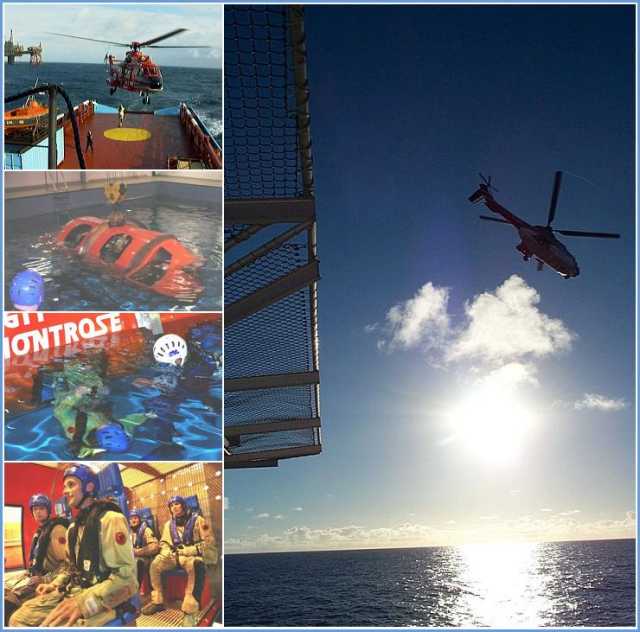
81. Helicopter Half Marathon – offshore survival

Brace ! Brace ! Brace ! Standby for ditching…..!

north-sea-helicopter-offshore-survival-training.jpgThese are the words you never, ever want to hear, especially when you’re flying at low altitude above the North Sea. But they were real enough, and strapped firmly into my seat, there was absolutely nothing I could do about it.

It’d been a hell of a bad day already, to be frank. One problem after another. The whole morning spent dousing out a series of kerosene fires, and then that frightening traverse in breathing apparatus through a blackened and smoke-filled furnace to escape. Without even mentioning the exploding chip pan in the galley.

And now, after all of that, our helicopter was going down. Again.
Continue reading

75. The Cruel Sea – the Indian Ocean tsunami

“We learn geology the morning after the earthquake”.
Ralph Waldo Emerson – American poet, lecturer and essayist (1803-1882).

“We have very little control over external forces such as tornadoes, earthquakes, floods, disasters, illness and pain. What really matters is …. How do I respond to those disasters ? Over that I have complete control.”
Leo F. Buscaglia – American guru and Professor at the University of Southern California (1924-1998).

“An earthquake achieves what the law promises but does not in practice maintain – the equality of all men.”
Ignazio Silone – Italian author and earthquake orphan (1900-1978).

tsunami-2004-indian-ocean.jpg
(Photos © AP, AFP, Getty Images)

If ever there were a week for new perspectives, then this is it.
Continue reading

43. A sense of time – Earth history and the London Marathon

grand-canyon-a-sense-of-time.jpg

In geology, you learn about time. About a lot of time.

As I look from my window upon the Surrey Downs, I see the Chalk and Greensand hills, walked by pilgrims heading east to Canterbury for eight hundred years and more. That seems a lot of time.

But to the Earth, it’s nothing. Our planet is around 4.6 billion years old, give or take a few. That IS a lot of time.

A new perspective is required, so let’s imagine the Earth’s own lifetime as a marathon course. The longest journey, but even in this unimaginable race, every 100 million years meant just one kilometre en route from Greenwich to The Mall.
Continue reading