Category Archives: history

178. Full fathom five – on Elbow Beach, Bermuda

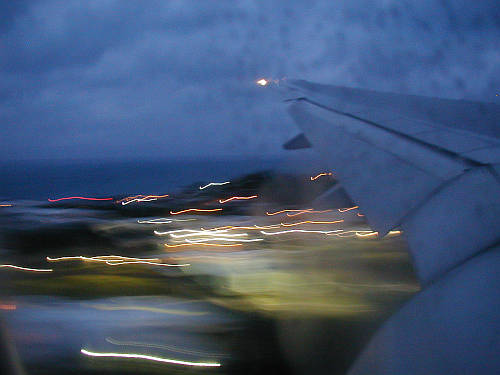
night-landing-in-bermuda-by-haywards-heath.jpg“Now would I give a thousand furlongs of sea for an acre of barren ground”
– The Tempest, Act 1, Sc.1

“Full fathom five thy father lies” – The Tempest, Act 1, Sc. 2

The sky is falling all around me as the winter afternoon is fading. Down, down we glide, towards the North Atlantic. Three thousand miles of unforgiving sea are all behind us and ahead lies just a pinprick of green holding out against the blue-grey vastness of the ocean.

The rain lashes against the windows as our wings bank on the approach, the landing lights looming nearer in the dusk. A rugged landfall, but now we’re safe.

Outside the airport and across the causeway, a deluge is raging in sheets across the road, the palm trees swaying wildly in the storm. The evening washes itself wet and windswept upon the shore. Continue reading

177. From white box to empty shell – rebuilding the Royal Shakespeare Theatre, Stratford-upon-Avon

royal-shakespeare-theatre-river-stratford-upon-avon-england-2008-by-roadsofstone.jpgThere’s a brick building at the end of the street where I grew up. I run past it every time I’m in Stratford-upon-Avon.

Today, it’s just an empty shell.

After more than seventy years, a new Royal Shakespeare Theatre is being built inside the framework of the old one.

It’s a constraining decision, architecturally – which limits the capacity and design of the new theatre, whilst still destroying the marvellous art deco foyer within. Just think – for £110 mm we could have had a Sydney Opera House instead of a revamped old blockhouse with only 1,000 seats – a third fewer than before.

royal-shakespeare-theatre-rebuild-stratford-upon-avon-england-2008-by-roadsofstone.jpgLooking across the river now, I can see empty space where the heart of the building should be.

And in a way, that’s just how it was in 1970 when I saw my first Shakespeare play here – Peter Brook’s famous ‘White Box’ production of A Midsummer Night’s Dream, famously staged inside a chasm of blank white walls.
Continue reading

175. The price of oil: peak petroleum production and energy economics in a thirsty world

NOTE: May 2009 — For further updates on the oil price, see also:
The price of oil: 3 — energy economics and the financial crisis;
The price of oil: 4 – a rising road ahead.

north-sea-oil-rig-and-helicopter-offshorepictures.jpgIt was a chilly evening in early February when the Managing Director called us all together. He paused a moment, glanced at the expectant faces all around him, and then he started.

Business is tough, he said, and we’re doing what we can. But finally, we’ve reached that moment when we’ve got to let some of you go.

A hundred of us stood there then, looking at each other, at the floor, and at the winter’s dusk outside.

There was silence. Some more explanation was required, and some more honesty was needed. And, to his credit, Mitch provided it. As ‘this company is going down the toilet’ talks go, it was pretty fairly done.

We’d had problems with one of our installations in the North Sea, he told us. We all knew that already. In the big money business of finding oil and gas and getting them to the beach, failing on either of those priorities was never good.

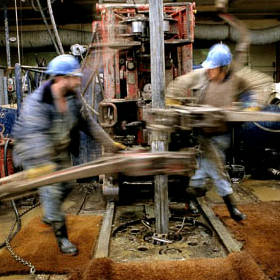
roustabouts-on-the-drill-floor.jpgAn asset team would miss its targets, and there’d be no bonuses or payrises for anyone ahead. Such is business, in any organisation. But this time, it was worse.

It’s the oil price, he said. February, 1999. Continue reading

174. The hidden history of Texas – on Buffalo Bayou, Houston, USA

texas-street-houston-usa-by-roadsofstone.jpgTexas.

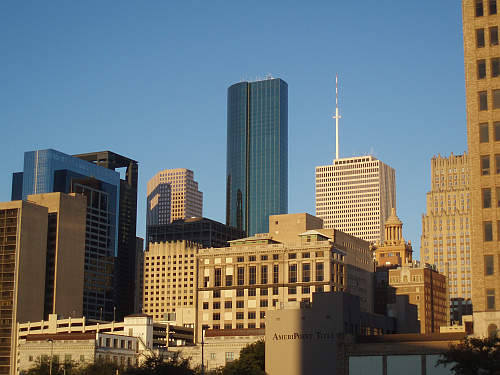
So reads the street sign, and everything they say is true. The sky, the buildings, the cars, the winter weather – they all seem so much bigger here.

Downtown, early morning. A fading twilight was lifting above the Astrodome when I peered out through the curtains five minutes ago, and now it’s nearly daybreak.

The eastern horizon is promising cool and blue and cloudless – a perfect Texas dawn is calling. For now, Houston has a sleepy air, the metropolis still dappled and drowsy and awaiting the day.

If you want to know a city, just run through it streets, and look up and all around you. Breathe its atmosphere and history, and immerse your soul in the rush before your eyes.

Live a different life, for a few brief footsteps, and surrender your mind to the wanderings of your feet. Lose yourself.
Continue reading

173. Lines on the New Hampshire primary 2008

So. Farewell then
barack-obama-the-audacity-of-hope-random-house.jpg Barack Hussein Obama
The Audacity of Hope

For five January days
We believed
The world could change

And then New Hampshire
Told you
They’d changed their minds
Instead.

With apologies to EJ Thribb (17 ½)

* * * * *

Coming soon:
To mark the start of USA 2008 new-hampshire-snow-by-atonal-at-flickrdotcom.jpgthis column is taking temporary residence deep in the snows of New Hampshire.

Please see From Scratch for a specially syndicated Roads of Stone, reporting on the US primaries.

173. Lines on the New Hampshire primary 2008 : : 173. Lines on the New Hampshire primary 2008 : : 173. Lines on the New Hampshire primary 2008 : : 173. Lines on the New Hampshire primary 2008 : : 173. Lines on the New Hampshire primary 2008 : : 173. Lines on the New Hampshire primary 2008

Related articles:
84. Election Special
110. The hands that built America – Houston skylines
barack-obama-nashua-new-hampshire-2008.jpg148. Farewell to Tony Blair
4. GO British ! Chicago Marathon 2002
17. It’s puzzling – a letter on Iraq, to Tony Blair
71. How the West Was Won – Iraq implodes

172. Kenya 5: on corruption and a crooked election

beach-crafts-kenya-august-2007.jpg‘Say No to Corruption,’ read the badge on the immigration officer’s sleeve at Mombasa airport. Drawing our attention to the issue, right from the moment when we entered the country.

Kenya’s president from 1978 to 2002, Daniel arap Moi, was widely detested for corruption and political oppression. During his term, Kenya slipped from the 133rd to the 155th country in the world in economic prosperity. There might not be that many more countries.

Moi’s successor, Mwai Kibaki, was elected on an anti-corruption ticket – hence the badge campaign in Mombasa. But when I asked Kenyans during our visit what they thought of Kibaki – they were unanimous. ‘He’s the same as all the others,’ they said. ‘Corrupt, just like the rest of them.’

Yesterday’s declaration of Kibaki as victor in the Kenyan elections, despite a string of exit polls indicating firmly that he had lost to Raila Odinga, serves only to confirm that view.

Corruption. It might be Africa’s biggest problem. Certainly it’s the one trotted out by people who don’t want to help the continent. ‘There’s no point giving money, or aid,’ they say. ‘It’s unlikely to end up with those who need it.’

But this trip, I began to understand corruption, just a little. Not the kind of barefaced electoral swindle which threatens the whole practice of democracy, but rather the day-to-day variety. The siphoning off the top of just a little, and then more and more goods and money, so that finally they don’t arrive at all.

Why do people do it, and how can they so mindlessly deprive the needy ? That’s something I’d never come close to comprehending before.
Continue reading