Category Archives: environment

175. The price of oil: peak petroleum production and energy economics in a thirsty world

NOTE: May 2009 — For further updates on the oil price, see also:
The price of oil: 3 — energy economics and the financial crisis;
The price of oil: 4 – a rising road ahead.

north-sea-oil-rig-and-helicopter-offshorepictures.jpgIt was a chilly evening in early February when the Managing Director called us all together. He paused a moment, glanced at the expectant faces all around him, and then he started.

Business is tough, he said, and we’re doing what we can. But finally, we’ve reached that moment when we’ve got to let some of you go.

A hundred of us stood there then, looking at each other, at the floor, and at the winter’s dusk outside.

There was silence. Some more explanation was required, and some more honesty was needed. And, to his credit, Mitch provided it. As ‘this company is going down the toilet’ talks go, it was pretty fairly done.

We’d had problems with one of our installations in the North Sea, he told us. We all knew that already. In the big money business of finding oil and gas and getting them to the beach, failing on either of those priorities was never good.
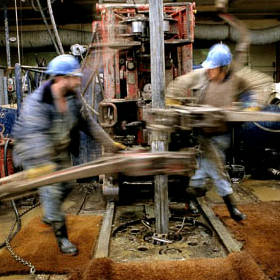
roustabouts-on-the-drill-floor.jpgAn asset team would miss its targets, and there’d be no bonuses or payrises for anyone ahead. Such is business, in any organisation. But this time, it was worse.

It’s the oil price, he said. February, 1999. Continue reading
174. The hidden history of Texas – on Buffalo Bayou, Houston, USA

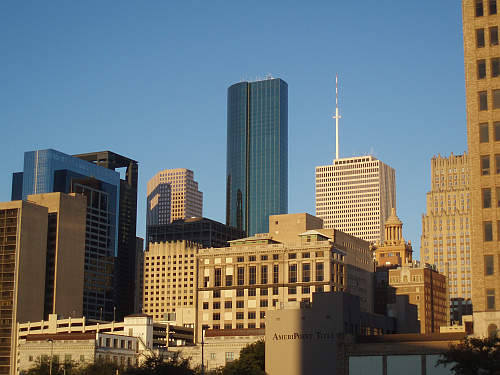
texas-street-houston-usa-by-roadsofstone.jpgTexas.

So reads the street sign, and everything they say is true. The sky, the buildings, the cars, the winter weather – they all seem so much bigger here.

Downtown, early morning. A fading twilight was lifting above the Astrodome when I peered out through the curtains five minutes ago, and now it’s nearly daybreak.

The eastern horizon is promising cool and blue and cloudless – a perfect Texas dawn is calling. For now, Houston has a sleepy air, the metropolis still dappled and drowsy and awaiting the day.

If you want to know a city, just run through it streets, and look up and all around you. Breathe its atmosphere and history, and immerse your soul in the rush before your eyes.

Live a different life, for a few brief footsteps, and surrender your mind to the wanderings of your feet. Lose yourself.
Continue reading

166. Kenya 3: Masai Mara – the last wilderness

dawn-masai-mara-kenya-august-2007.jpg

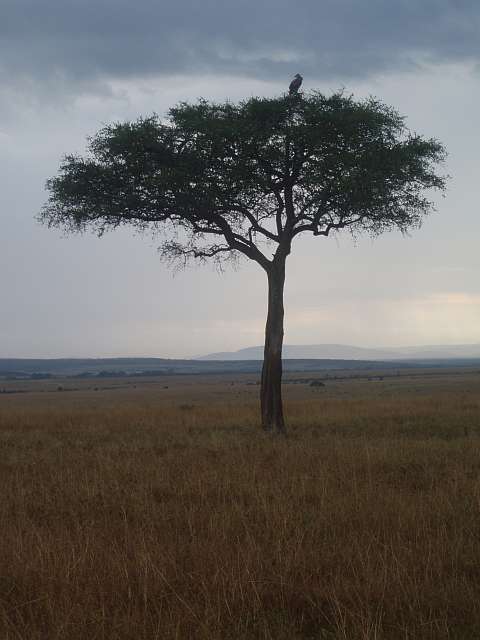
Cool grey skies hang their high curtain above the savannah this morning. Scarcely any flash of colour. Just pale grassland, reaching as far as the eye can see, the horizon broken only by the gentle rise of distant hills and the lonely spread of a guardian acacia tree.

vulture-in-tree-at-sunrise-masai-mara-kenya.jpgWe rumble on, the tyres of the Land Rover clawing restlessly at the gravel. A shroud of pink is forming slowly in the east, where an invisible sun is lightening the underbelly of rippled cloud like some low energy lightbulb down a lonely corridor – weak and inept at first, then adding detail with every second.

Dawn on the Masai Mara – daybreak over one of the last wildernesses on Earth.
Continue reading

158. How evolution works

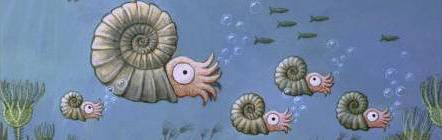
If life evolves steadily from one species to another, then why do homo sapiens and chimpanzees still co-exist ? That’s a classic question, and one which goes right to the heart of evolution.

It’s important to our understanding of how all life forms develop, and to reconstructing the the evolution of early man (thanks to Ella for the link).

ammonites2.jpg

The point is that whilst evolution is a slow process, the mechanism which allows change to happen is not a gradual one at all. We might see Darwin’s drawings of Galapagos finches as a continuous spectrum of evolutionary development, but perhaps that sketch gives quite a false impression of how evolution really works.

When evolutionary change takes place, it does so rapidly and abruptly.
Continue reading

144. East of Eden – evolution and enlightenment

east-of-eden.jpgThe wonder of geology, to me, is that it’s so much more than a study of inanimate rocks and stones. It’s a history of our planet, of life on Earth, and even of time itself.

The landscapes and seas around us, our climate, the plants and animals we depend upon to live, the resources we use whenever we go anywhere or make anything – geology is a route towards the understanding of all those things.

Every historian and foreign correspondent knows that in order truly to know the present and to predict the future, we have to understand the past.

dinosaur-footprints.jpgAnd that is what geology gives us. Geology is a unifying discipline, which borrows so much from other science, and puts it all together to reveal the history of our planet and of life both past and present.

It’s so much of what we know about our world, and about ourselves as well.

But there’s a debate going on, right now, in the most developed country in the world, about whether any of it is true.
Continue reading

140. The Great Global Warming Swindle

A Channel 4 documentary to be broadcast in the UK this Thursday evening and entitled The Great Global Warming Swindle argues that global warming is real, but that it is caused by entirely natural cyclicity in solar insolation.

Predictably this sensationalist claim has already been seized upon by the media. It will doubtless be interpreted by many as proof of the hoary old chestnut that ‘the scientists are divided’ on global warming. Those same people will find easy and equally inaccurate confirmation that there is no need to muzzle their gas-guzzling SUVs or to take the slightest care of our energy resources.
Continue reading